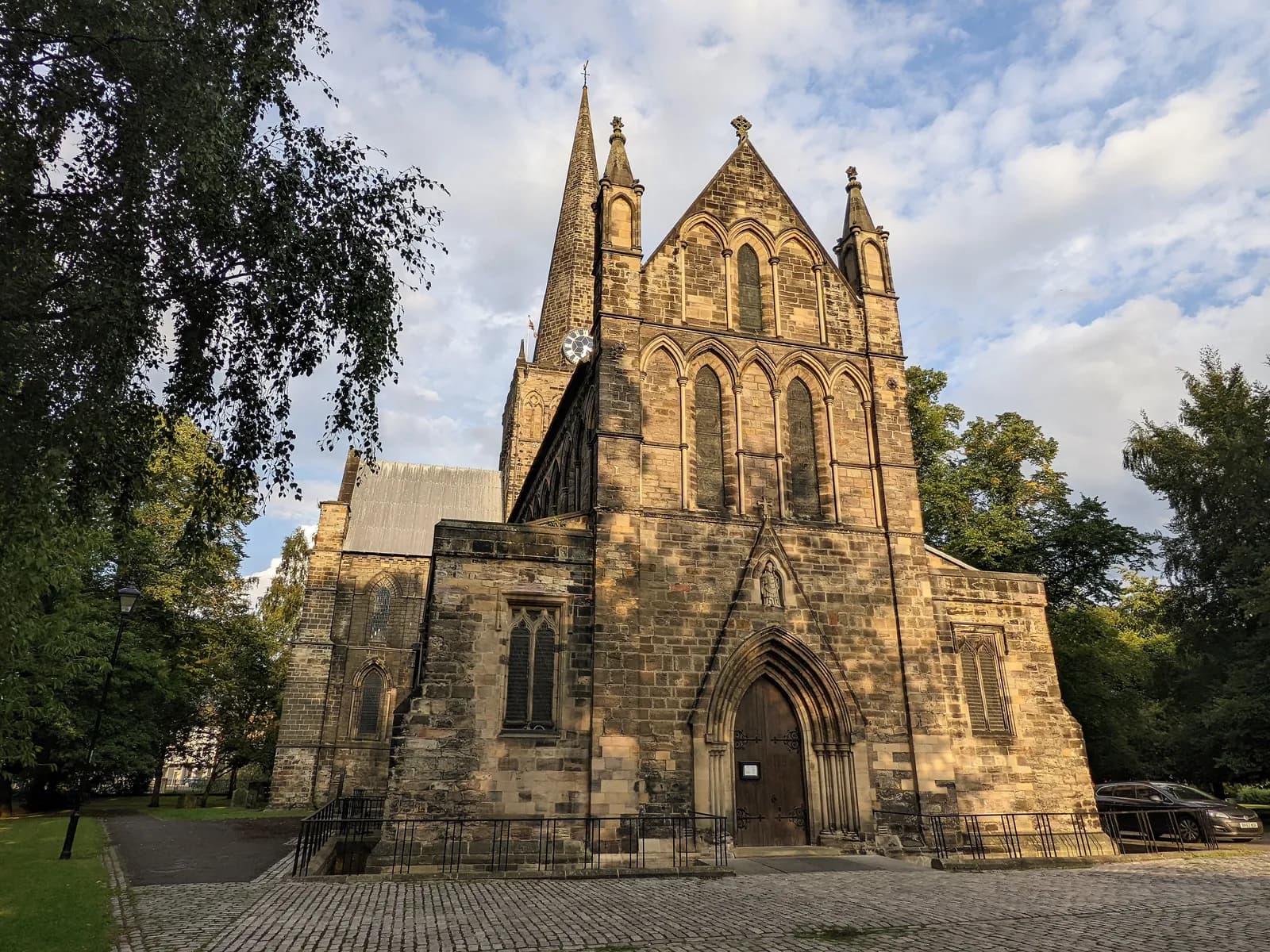
The remains of an 11th-century church have been discovered beneath the floor of St Cuthbert's Church in Darlington, revealing over nine centuries of continuous worship on the site. The discovery was made in March 2026 during a £2.5 million restoration project intended to make the church more accessible.
The Discovery Beneath the Victorian Floor
Workers were lowering the Victorian floor when they uncovered walls believed to date from circa 1080. The roughly-worked facing stones sit either side of a rubble core, resting on deep foundations of cobbles. The walls measure approximately 1.2 metres wide and were found sitting slightly askew to the lines of later columns above them.
Archaeologists from The Archaeological Practice of Newcastle worked alongside the Parochial Church Council and Pinnacle Construction to document the remains. No clear remains of the east end wall have been detected, though there are hints of western walls that may have been associated with a tower.
Connection to St Cuthbert's Community
The walls likely belong to a church built just after the Norman Conquest, following the eviction of the community of St Cuthbert from Durham. This connection provides tangible evidence of the widespread influence of St Cuthbert's cult across Northumbria during the 11th century.
St Cuthbert, a monk, bishop, and hermit who lived from approximately 634 to 687, was associated with Melrose and Lindisfarne monasteries in the Kingdom of Northumbria. Churches dedicated to him throughout the region reflect his enduring significance in early Northumbrian Christianity.
Norman Builders and Architectural Continuity
A century after the construction of the 1080 church, the present St Cuthbert's Church was built by the Normans. They used the 11th-century walls as bases for arcade columns, demonstrating how medieval builders adapted existing structures rather than clearing sites completely.
This architectural continuity illustrates the transition from Anglo-Saxon to Norman ecclesiastical construction. The present Grade I listed church dates from 1183 and became collegiate in 1439 when Richard Whitton was appointed as the first Dean of Darlington by Bishop Robert Neville.
Darlington's Anglo-Saxon Origins
The discovery reinforces Darlington's deep historical roots as an Anglo-Saxon settlement. The town's name derives from the Old English "Dearthington," meaning "the settlement of Deornoth's people." By Norman times, the name had changed to Derlinton.
St Cuthbert's is widely recognised as one of the most important early English churches in the north of England. The site has long been known for Anglian sculpture from the 10th and 11th centuries, suggesting the possibility that the recently discovered walls could be associated with even earlier structures.
Preservation and Public Access
Marc Johnstone, project officer for The Archaeological Practice of Newcastle, stated that although the walls could be earlier, "it is likely that the recently discovered walls are those of a church built in or around 1080."
A 3D image of the work area has been produced to record the findings, and revised plans are being drawn up by the architect to ensure the remains are preserved. When renovations are complete, digital imagery of the findings and a visual reconstruction will be available for visitors to the church.